

Chartered Building Surveyors in London and the South East
Key Services
Key Commercial Services
If your matter relates to lease-end liability, neighbour procedure, or evidential condition recording, these three service pages are the best place to start.
Lease-end claims
Dilapidations
Landlord and tenant advice on schedules, quantified demands, lease interpretation, and negotiated settlement.
Explore DilapidationsNeighbour procedures
Party wall matters
Notices, adjoining owner response, schedules of condition, awards, and practical support before works start.
Explore Party wall mattersLease protection
Schedules of condition
Condition recording for lease commencement, pre-works evidence, and later protection against dispute over pre-existing condition.
Explore Schedules of conditionServices
Approach

Ethics
We are regulated by the Royal Institution of Chartered Surveyors and professional ethics are central to our ethos.
Efficiency
As an RICS Tech Partner we develop software for the surveying industry. Efficiency and accuracy are at the heart of what we do.

Integrity
We conduct our business with integrity, ensuring transparency and honesty in all our dealings. Our ethical approach builds trust and fosters long-term relationships with our clients.

Sustainability
We are committed to promoting sustainable practices in all our projects. Our focus on environmental responsibility ensures that our work contributes positively to the environment.
Testimonials
Nick M
I recently had the pleasure of working with Clayton from Ayling Associates for a home survey on a property I am purchasing in London. From start to finish, Clayton was incredibly thorough, professional, and personable. The level of detail in the survey report was outstanding, covering every aspect of the property with clear, concise explanations. Clayton identified key areas of concern and provided practical, actionable recommendations that have been invaluable as I move forward with the purchase. His expertise, particularly in assessing structural concerns, gave me the confidence I needed to make an informed decision. Clayton was always available to discuss the findings and answer any questions I had, going above and beyond to ensure I fully understood every detail. His communication was excellent throughout the process, making what could have been a stressful experience much smoother and more manageable. I highly recommend Clayton and Ayling Associates to anyone in need of a reliable and knowledgeable surveyor. Their commitment to client satisfaction and their deep understanding of property issues truly set them apart. Thank you, Clayton, for your exceptional service!
Date: 30th of August 2024
View on GoogleSocial Media Feed
When faced with a terminal schedule of dilapidations as a tenant, especially during the exercise of a break clause, it's crucial to navigate the process with thoroughness. Dilapidations can often be a complex field, with potential pitfalls and significant f...... Read more
Upon receiving a terminal schedule of dilapidations, the initial step should be to seek professional advice to understand fully the claims being made and the obligations stipulated in your lease agreement. Our team at AAL Surveyors collaborates closely with experienced solicitors and liaises effectively with landlords' surveyors to ensure your position is robustly represented and protected.
A vital component of this process is the negotiation and finalisation of a release letter. This document is essential as it confirms the agreement between the tenant and the landlord concerning the condition of the property at the lease's end. Precision in the language used is crucial to reflect accurately the deal the tenant expects and to secure in terms favorable for both parties.
In this recent engagement, our approach involved working alongside solicitors and the landlord's surveyor. Our aim was to negotiate a release letter that not only aligned with our client's expectations but also facilitated a smooth and unambiguous final agreement. Our efforts ensured that the final engrossed document accurately embodied the agreed settlement terms, providing our client with reassurance and clarity as they moved forward.
For tenants, the benefits of such diligent professional support are clear. Not only does it help in possibly reducing the financial burden associated with dilapidations claims, but it also aids in ensuring a clean and undisputed exit from the property. This sets a solid foundation for future lease negotiations and maintains a good professional relationship with the landlord.
Our team offers technical and legal insight in the handling of tenant dilapidations, with a focus on achieving outcomes that align with our clients’ lease obligations and commercial objectives.
#terminalschedule #dilapidations #interimschedule #CommercialProperty #PropertySurveying #AssetManagement #PropertyMaintenance #BuildingDefects #BuildingSurveying #ConstructionSurveying #RealEstateSurveying #LeaseManagement

In creating a schedule of condition for industrial units such as those with administrative offices in Edmonton, North London, it is imperative to provide a comprehensive overview that highlights any pre-existing issues or vulnerabilities. One critical aspec...... Read more
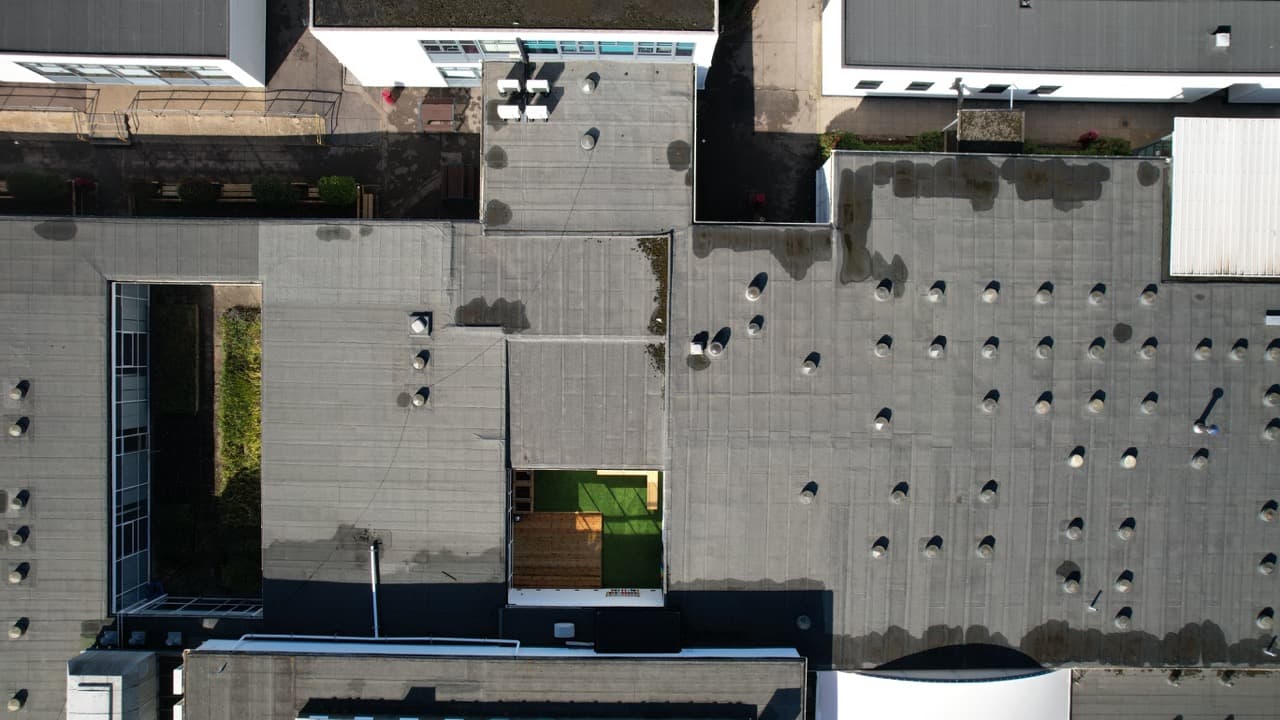
In this modern age, technology plays a crucial role in enhancing the thoroughness and accuracy of surveys. During a recent project, we adeptly utilised drone-based roof surveys, a method that offers a distinct advantage by capturing high-resolution aerial imagery. This approach ensures a detailed record of the roof's state, encompassing aspects like coverings and rainwater goods. It not only minimises the potential for disputes at the lease's end but also ensures that areas typically challenging to inspect, due to cost or safety concerns, are thoroughly documented.
Adopting such innovative techniques in our surveying processes allows us to offer a superior level of service, ensuring that both landlords and tenants have a clear understanding of existing conditions and potential issues. This foresight helps to manage risks effectively, creating a smooth and transparent lease engagement for all parties involved.

Efficiently navigating the complexities of a large industrial unit inspection, especially one with accompanying administrative offices like in Edmonton, North London, requires attention to detail. Our bespoke software is at the heart of this process, offeri...... Read more
These bespoke tools are instrumental in creating schedules that are not only easy to interpret but also firmly anchored in objective, well-documented records. By utilising this innovative software, we're able to produce detailed and consistent reports swiftly, which proved invaluable in a recent assignment. Our client was afforded clear insight into their repair obligations, effectively capturing the initial condition to prevent any future disputes.
This strategic approach ensures that each schedule we prepare supports fair and transparent lease management, clearing up potential ambiguities that might arise. If you're considering a full assessment for your industrial premises, our structured, technology-driven methodology promises a hassle-free and thorough documentation process, perfectly tailored to your specific needs.

A well-prepared schedule of condition serves as an invaluable asset in any lease agreement, particularly for large industrial units with administrative offices, such as in Edmonton, North London. The key to a successful schedule is all in the detail and org...... Read more
We utilise our own bespoke software that enhances clarity and coherence. Each photograph taken is tagged with location and element type, offering an ease of navigation that sets our records apart. This tagging system not only aids efficiency but also enhances the accuracy and credibility of the document, ensuring all parties have a clear understanding of the property's condition.
We understand that storage needs can vary, so all high-definition images are provided in three different file sizes. This flexibility ensures our clients can choose the best option to suit their needs, whether it's for comprehensive review or streamlined storage.
Furthermore, the original files are provided in a structured format, ensuring full traceability and helping to maintain the integrity of the visual records over the duration of the lease. This approach is designed to instil confidence and peace of mind, knowing every aspect of the property’s condition is documented clearly and thoroughly.
Whether you require a schedule of condition for an industrial unit, commercial space, or residential property, our expertise and innovative solutions are here to support you in navigating the complexities of lease agreements with clarity and assurance.

Dilapidations Advice for Warehouse Unit in South East London: Methodology
We are dedicated to providing our clients with thorough and strategic dilapidations advice ensuring that tenant obligations and liabilities are clearly understood and managed effecti...... Read more
We are dedicated to providing our clients with thorough and strategic dilapidations advice ensuring that tenant obligations and liabilities are clearly understood and managed effectively. Our approach typically involves the following steps:
1. Lease Documentation Review
Initially we review the lease documents to pinpoint the relevant dilapidations clauses and obligations relevant to the claim. This step is crucial to understanding the legal framework and responsibilities before any further assessment is made.
2. Schedule of Dilapidations Review
We then obtain and carefully analyse the schedule of dilapidations paying close attention to the listed items and any related timelines. This document is fundamental in setting the scope of our inspection and subsequent actions.
3 Site Inspection
Our chartered surveyors conduct a detailed onsite inspection of the property to ascertain its current condition. This involves a thorough examination to spot any discrepancies with the schedule and to understand the context of each noted issue.
4. Evidence Compilation
We gather substantial photographic and documentary evidence during our inspection to substantiate our findings. The evidence that we gather is essential for accurately presenting the condition of the property and supporting any discussions or negotiations.
5. Condition Comparison
Our team compares the condition of the property as observed onsite with the details recorded in the schedule of dilapidations. We note any inconsistencies or erroneously included items which might affect the tenant liabilities.
6. Cost Assessment
We assess the scope and potential costs associated with the remedial works detailed in the schedule, always referencing current market rates to ensure fairness and accuracy.
7. Tenant Consultation
Subsequent to our assessment we engage directly with you the tenant to discuss our findings comprehensively. This includes a clarification of your lease obligations the physical condition findings and any potential areas for dispute or negotiation.
8. Legal Consultation
If necessary we consult with legal advisers to dissect complex lease provisions or to discuss potential defence strategies. This is to ensure that every legal aspect is meticulously considered and upheld
9. Negotiation and Liaison
Finally we represent you in discussions with the landlord or their appointed agent. Our goal here is to negotiate any changes to the schedule of dilapidations based on our findings aiming to minimise your potential liabilities and ensure a fair conclusion.
#terminalschedule #dilapidations #BuildingSurveying #AssetManagement #CommercialProperty #BuildingDefects #PropertySurveying

At our recent commercial due diligence survey of an industrial unit in East London the findings of our report led to significant financial advantages for our client. We identified several issues which equated to potential cost savings of approximately £150,...... Read more
These findings played a pivotal role in empowering our client during lease negotiations. With the evidence provided by us, our client was able to engage confidently and effectively in discussions with the landlord. This not only facilitated a reconsideration of the lease terms but also allowed the client to negotiate a reduction in rental values and improvements to other lease-related conditions.
Our proactive approach in highlighting these issues underscores our commitment to adding tangible value to our clients' investment decisions.
By ensuring that all factors are thoroughly vetted, we position our clients in a place of strength, enabling them to make informed and advantageous decisions and negotiations.
#FacilitiesManagement #AssetManagement #PropertyMaintenance #BuildingDefects #BuildingSurvey #RealEstateSurvey #StructuralAssessment #PropertyInspection #CommercialBuildingSurvey #CommercialProperty
When Flat Roof Coverings Diverge from Standard Practice
We recently carried out a drone-based roof condition inspection in West London, where an unusual bituminous liquid-applied membrane had been installed over a zinc flat roof.
This type of overlay—rein...... Read more
We recently carried out a drone-based roof condition inspection in West London, where an unusual bituminous liquid-applied membrane had been installed over a zinc flat roof.
This type of overlay—reinforced with a textile mesh—is not typically encountered in applications of this kind, where polymeric systems are more commonly specified. In this case, surface discolouration, exposed reinforcement mesh, and evidence of ponding all raised concerns regarding durability and workmanship.
When flat roofing systems deviate from established detailing or product specifications, there is increased risk of premature failure—particularly when installation records or manufacturer compliance documentation are unavailable.
Early identification through external inspection can assist in defining appropriate next steps, including testing or sampling to determine whether remedial works or full replacement is required.
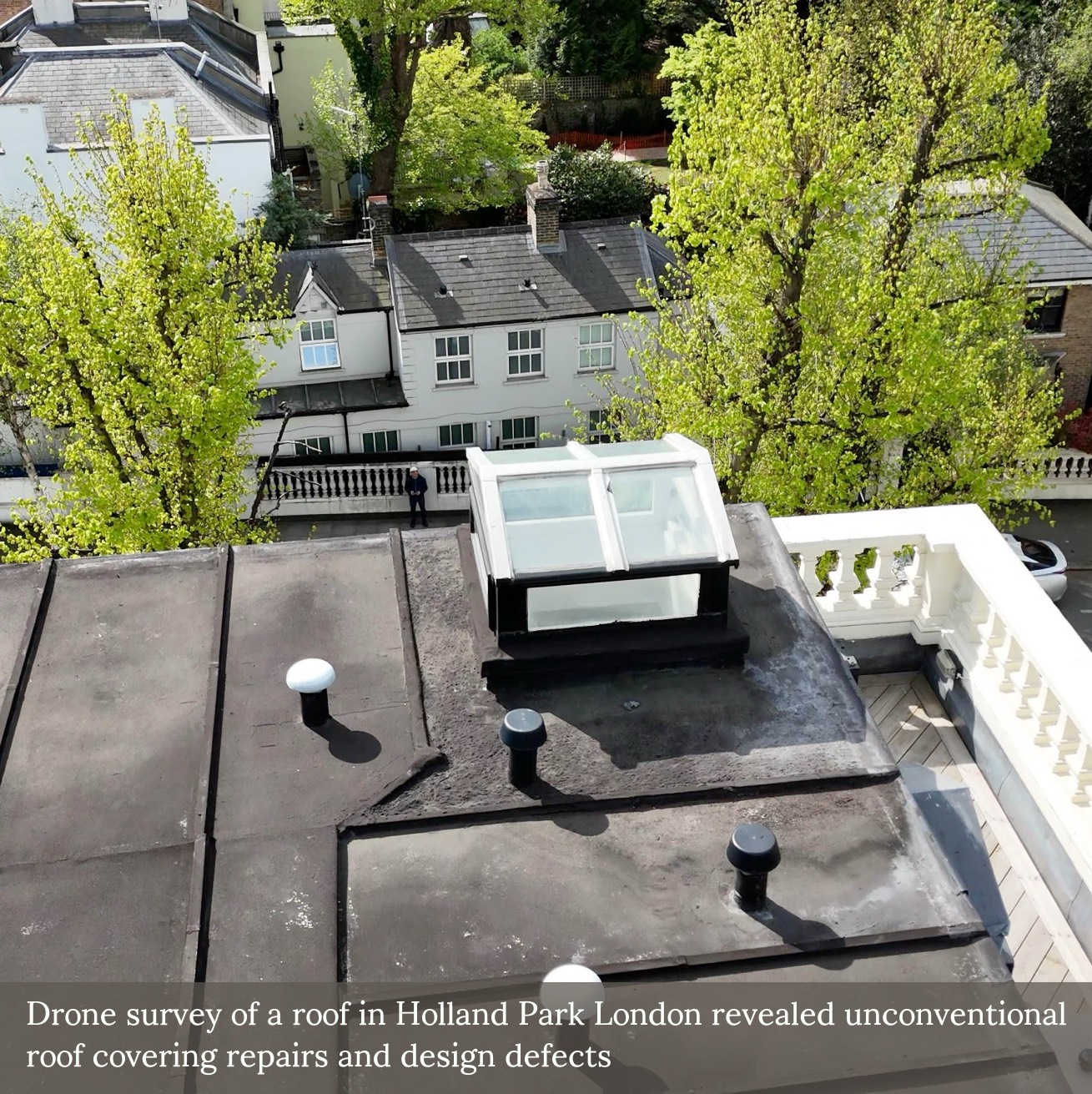
Roof Risk Without Internal Access
We are often instructed to assess external roof coverings where internal access is restricted. A recent case in W14 illustrates the value of high-level drone inspection for identifying latent structural concerns from the o...... Read more
We are often instructed to assess external roof coverings where internal access is restricted. A recent case in W14 illustrates the value of high-level drone inspection for identifying latent structural concerns from the outside.
Numerous depressions in the flat roof deck suggested potential hidden deterioration of the substrate, likely linked to historical water ingress. In the absence of internal inspection, we recommended core sampling to confirm the extent of any concealed damage and to inform the appropriate scope of remedial work.
External-only inspections, when carried out systematically, can yield sufficient evidence to justify further investigation, particularly where the risk of ongoing deterioration to concealed timber or insulation is suspected.
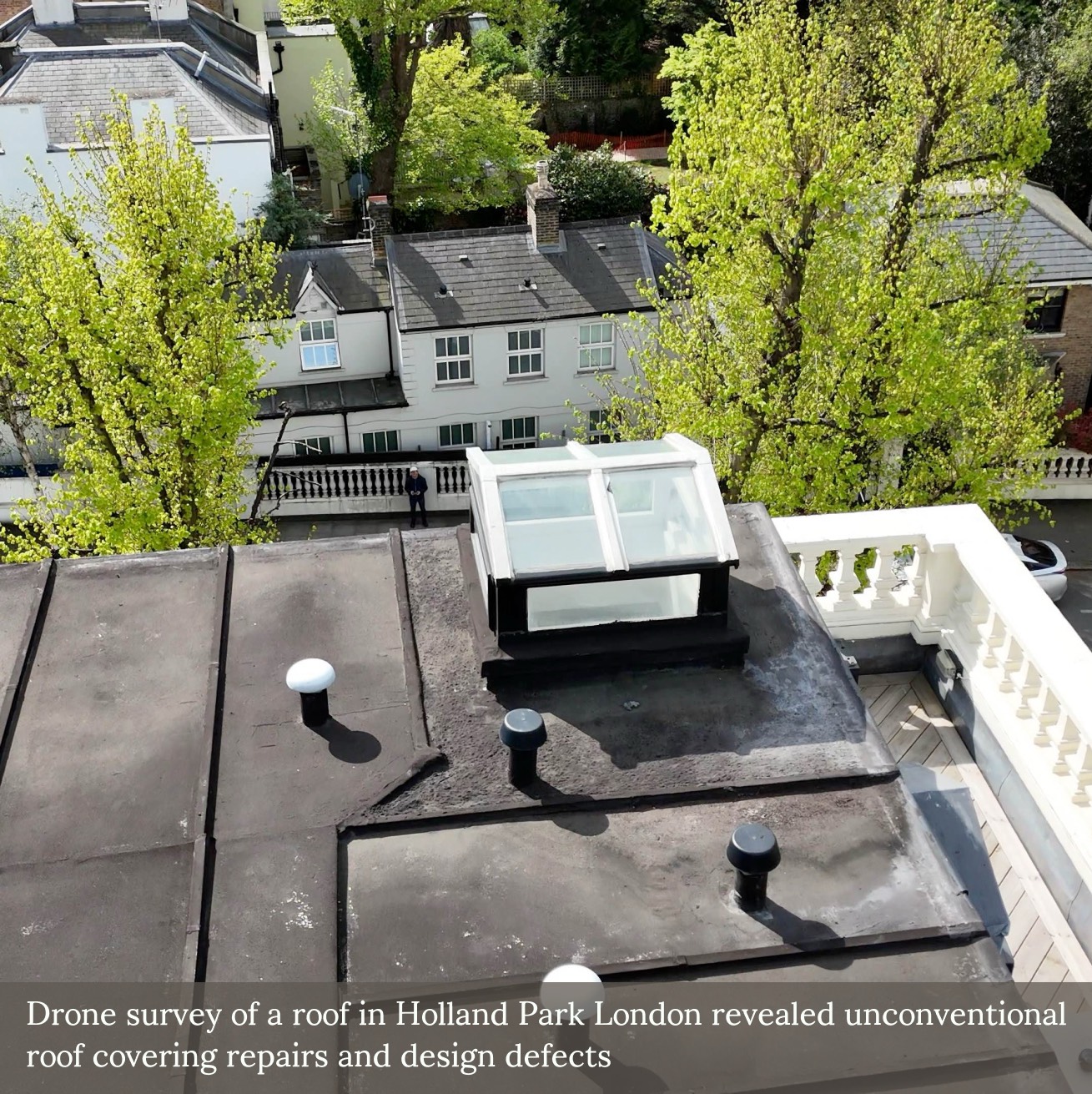
Where Roof Design Meets Condensation Risk
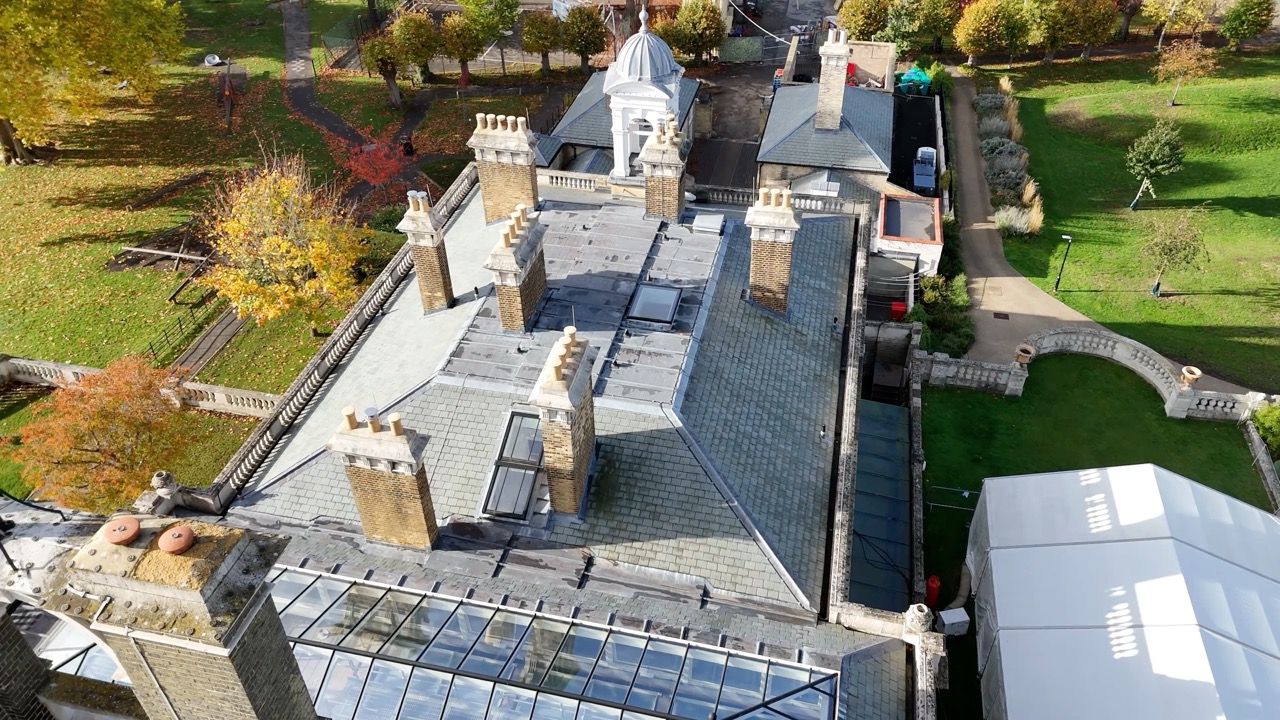
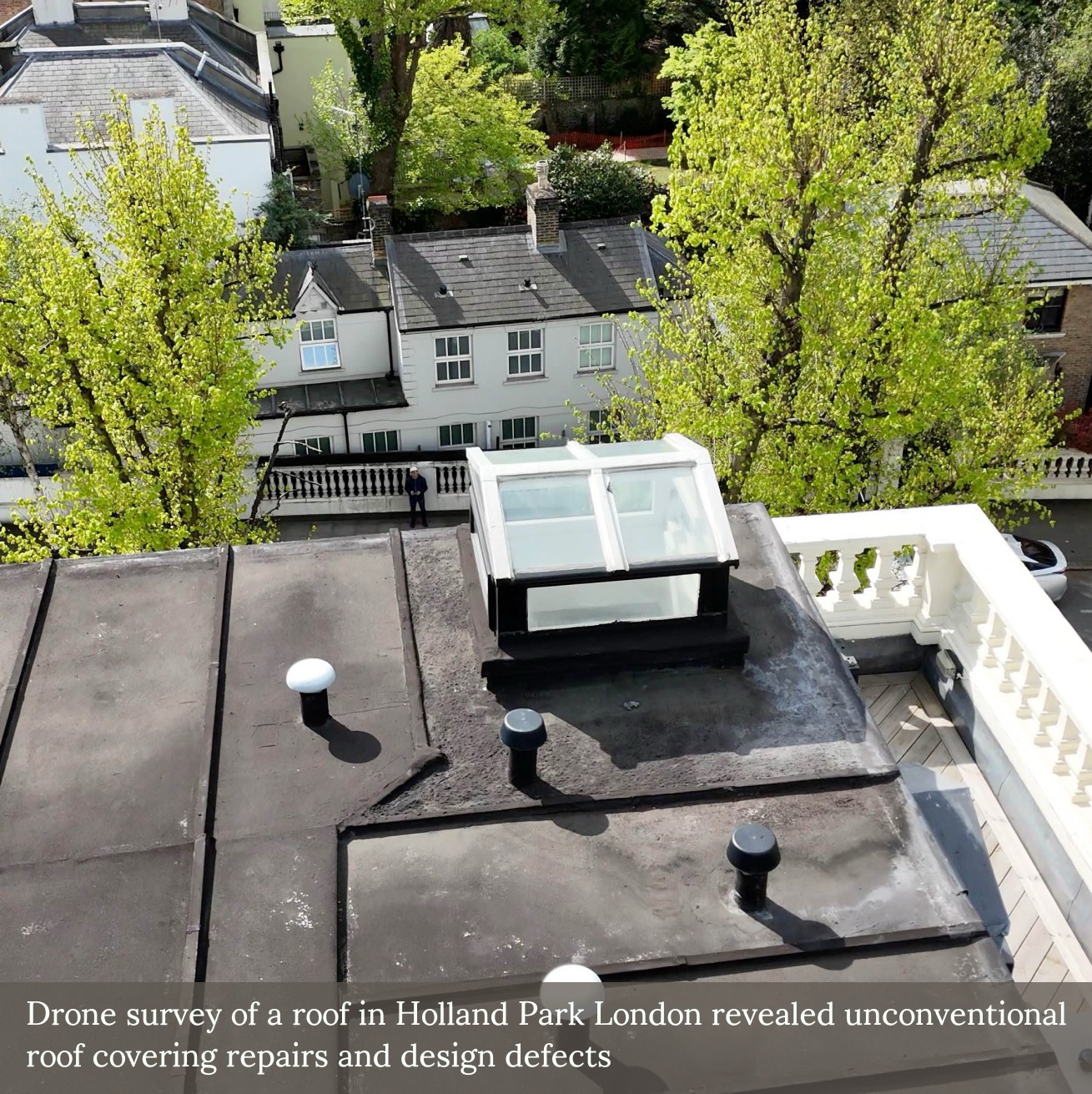
Two timber-framed roof lanterns formed part of a recent external inspection we undertook on a mansard roof in West London. Both featured single glazed elements, limited overhangs, and decorative paint finishes in p...... Read more
Two timber-framed roof lanterns formed part of a recent external inspection we undertook on a mansard roof in West London. Both featured single glazed elements, limited overhangs, and decorative paint finishes in poor condition.
The presence of condensation to internal glazing, along with signs of historical repair and timber exposure, highlights a common set of issues—particularly in traditional or poorly detailed roof structures.
Where single glazed rooflights are retained in occupied spaces, internal dampness is frequently the result of thermal bridging or trapped moisture, rather than rainwater penetration alone.
In such cases, replacement offers the opportunity to introduce modern, thermally efficient materials and more robust junction detailing—reducing risk and improving long-term performance.
Where Roof Design Meets Condensation Risk
Two timber-framed roof lanterns formed part of a recent external inspection we undertook on a mansard roof in West London. Both featured single glazed elements, limited overhangs, and decorative paint finishes in p...... Read more
Two timber-framed roof lanterns formed part of a recent external inspection we undertook on a mansard roof in West London. Both featured single glazed elements, limited overhangs, and decorative paint finishes in poor condition.
The presence of condensation to internal glazing, along with signs of historical repair and timber exposure, highlights a common set of issues—particularly in traditional or poorly detailed roof structures.
Where single glazed rooflights are retained in occupied spaces, internal dampness is frequently the result of thermal bridging or trapped moisture, rather than rainwater penetration alone.
In such cases, replacement offers the opportunity to introduce modern, thermally efficient materials and more robust junction detailing—reducing risk and improving long-term performance.

Where Roof Design Meets Condensation Risk
Two timber-framed roof lanterns formed part of a recent external inspection we undertook on a mansard roof in West London. Both featured single glazed elements, limited overhangs, and decorative paint finishes in p...... Read more
Two timber-framed roof lanterns formed part of a recent external inspection we undertook on a mansard roof in West London. Both featured single glazed elements, limited overhangs, and decorative paint finishes in poor condition.
The presence of condensation to internal glazing, along with signs of historical repair and timber exposure, highlights a common set of issues—particularly in traditional or poorly detailed roof structures.
Where single glazed rooflights are retained in occupied spaces, internal dampness is frequently the result of thermal bridging or trapped moisture, rather than rainwater penetration alone.
In such cases, replacement offers the opportunity to introduce modern, thermally efficient materials and more robust junction detailing—reducing risk and improving long-term performance.
Where Roof Design Meets Condensation Risk
Two timber-framed roof lanterns formed part of a recent external inspection we undertook on a mansard roof in West London. Both featured single glazed elements, limited overhangs, and decorative paint finishes in p...... Read more
Two timber-framed roof lanterns formed part of a recent external inspection we undertook on a mansard roof in West London. Both featured single glazed elements, limited overhangs, and decorative paint finishes in poor condition.
The presence of condensation to internal glazing, along with signs of historical repair and timber exposure, highlights a common set of issues—particularly in traditional or poorly detailed roof structures.
Where single glazed rooflights are retained in occupied spaces, internal dampness is frequently the result of thermal bridging or trapped moisture, rather than rainwater penetration alone.
In such cases, replacement offers the opportunity to introduce modern, thermally efficient materials and more robust junction detailing—reducing risk and improving long-term performance.
Where Roof Design Meets Condensation Risk
Two timber-framed roof lanterns formed part of a recent external inspection we undertook on a mansard roof in West London. Both featured single glazed elements, limited overhangs, and decorative paint finishes in p...... Read more
Two timber-framed roof lanterns formed part of a recent external inspection we undertook on a mansard roof in West London. Both featured single glazed elements, limited overhangs, and decorative paint finishes in poor condition.
The presence of condensation to internal glazing, along with signs of historical repair and timber exposure, highlights a common set of issues—particularly in traditional or poorly detailed roof structures.
Where single glazed rooflights are retained in occupied spaces, internal dampness is frequently the result of thermal bridging or trapped moisture, rather than rainwater penetration alone.
In such cases, replacement offers the opportunity to introduce modern, thermally efficient materials and more robust junction detailing—reducing risk and improving long-term performance.
Where Roof Design Meets Condensation Risk
Two timber-framed roof lanterns formed part of a recent external inspection we undertook on a mansard roof in West London. Both featured single glazed elements, limited overhangs, and decorative paint finishes in p...... Read more
Two timber-framed roof lanterns formed part of a recent external inspection we undertook on a mansard roof in West London. Both featured single glazed elements, limited overhangs, and decorative paint finishes in poor condition.
The presence of condensation to internal glazing, along with signs of historical repair and timber exposure, highlights a common set of issues—particularly in traditional or poorly detailed roof structures.
Where single glazed rooflights are retained in occupied spaces, internal dampness is frequently the result of thermal bridging or trapped moisture, rather than rainwater penetration alone.
In such cases, replacement offers the opportunity to introduce modern, thermally efficient materials and more robust junction detailing—reducing risk and improving long-term performance.
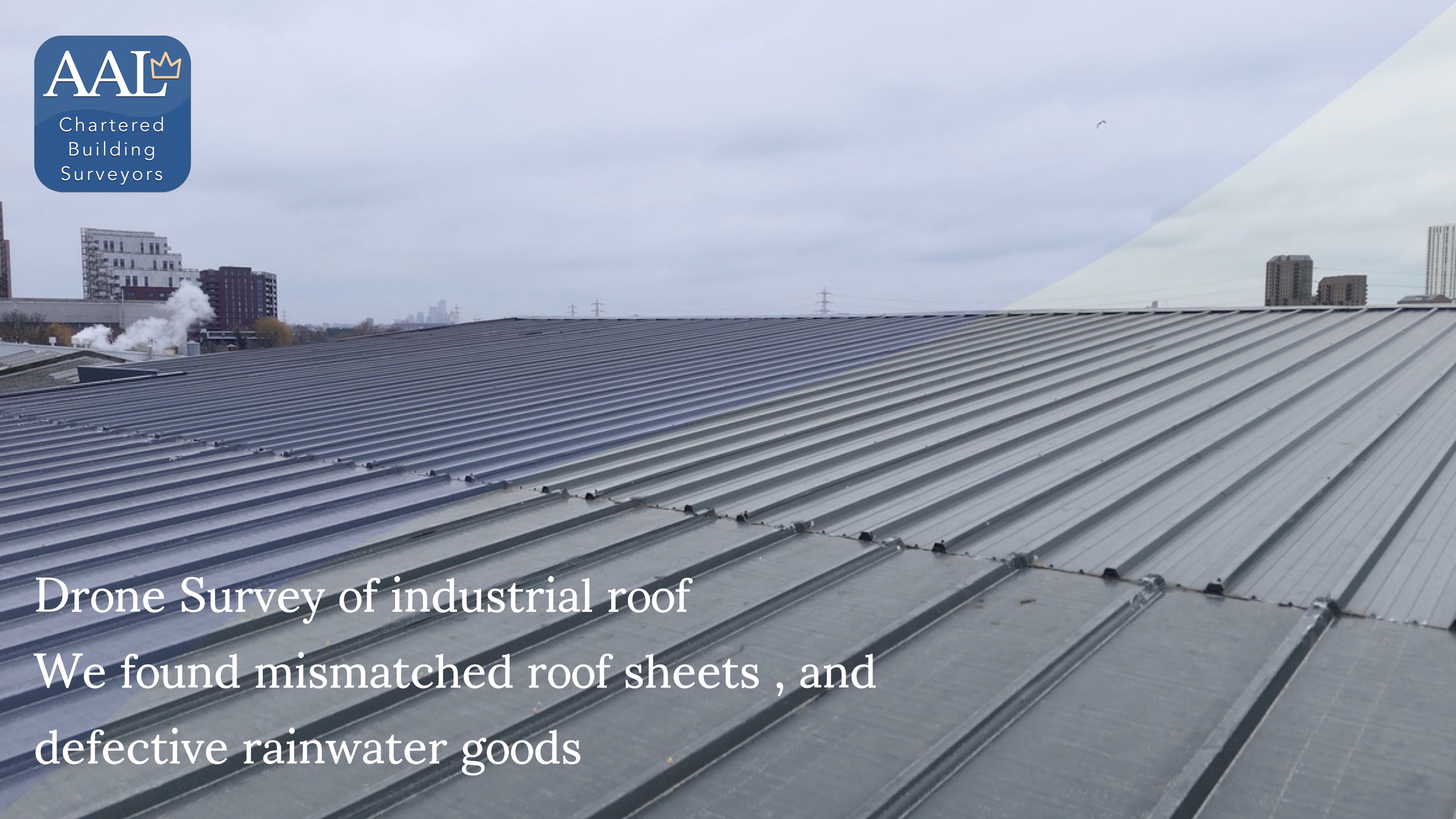
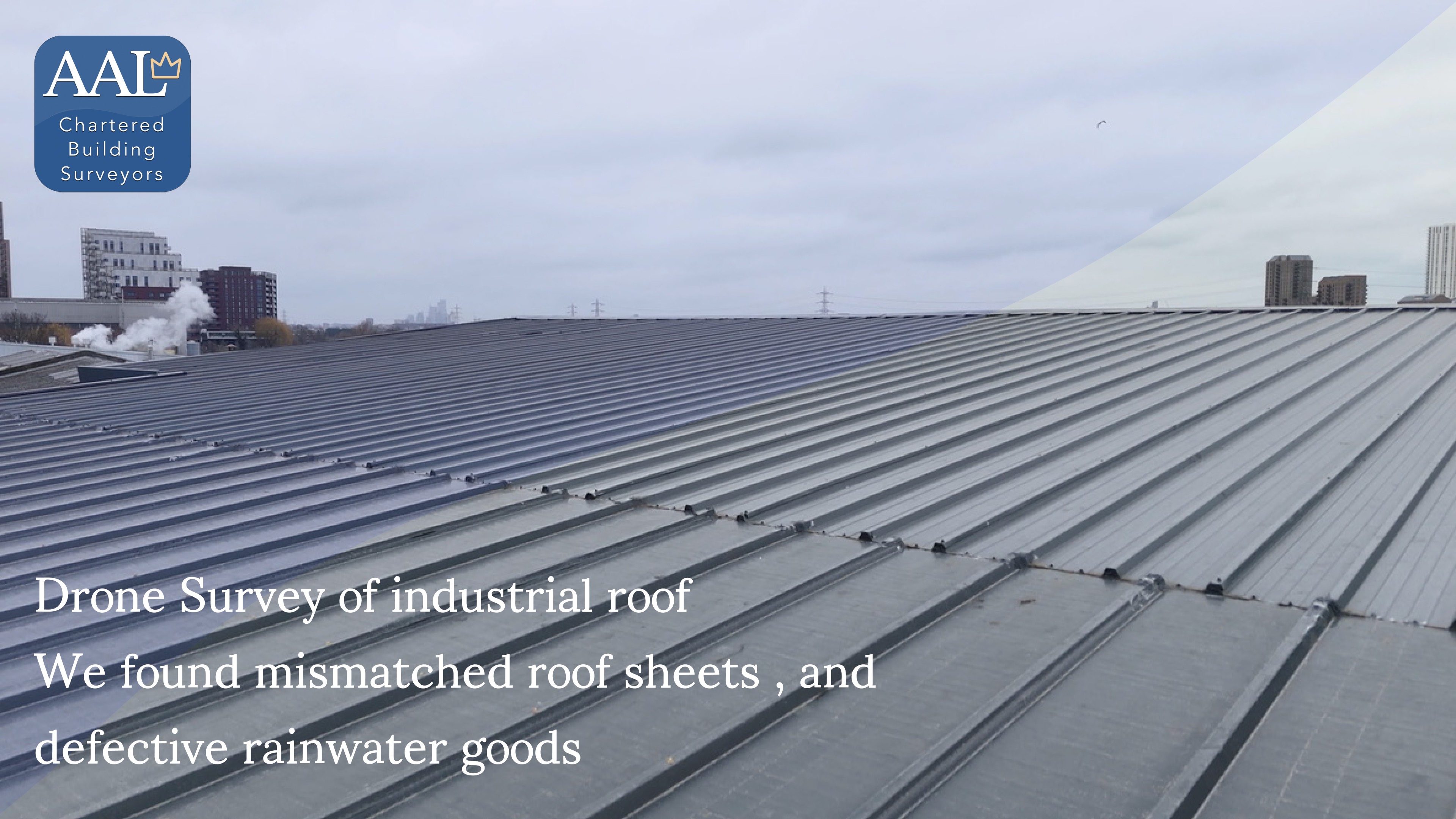
At our recent commercial due diligence survey of an industrial unit in East London, we utilised drone technology to conduct a detailed inspection of areas otherwise impossible to access, such as the roof, cladding, and high-level windows. Our surveyors, who...... Read more
The drone survey captured high-resolution images and data of the relevant areas, allowing us to identify key issues that might otherwise have been missed. Specifically, we discovered significant defects in the roof and cladding, along with issues in the rainwater goods. Such findings are crucial as they hold the potential to save our client significant expenditure, mitigating risks that could escalate into costly repairs if left unaddressed.
Our ability to integrate drone technology into traditional surveying practices not only elevates the thoroughness of our inspections but also adds substantial value to our clients by providing more comprehensive insights. This case in East London is a prime example of how leveraging innovative technology can lead to advantageous outcomes for our clients, ensuring their investments are sound, and their properties are maintained to the highest standard.
#FacilitiesManagement #AssetManagement #PropertyMaintenance #BuildingDefects #BuildingSurvey #RealEstateSurvey #StructuralAssessment #PropertyInspection #CommercialBuildingSurvey #CommercialProperty
Navigating a terminal schedule of dilapidations, particularly when linked to a break clause, requires careful handling to protect tenant interests and limit liabilities.
Our support typically includes:
1. Review of Landlord’s Schedule: We carry out a line...... Read more
Our support typically includes:
1. Review of Landlord’s Schedule: We carry out a line-by-line analysis of the landlord’s claim, identifying any overstated or unjustified items.
2. Preparation of Scott Schedule: Based on our review, we produce a structured counter-schedule, setting out what we consider fair and reasonable.
3. Negotiation: Using the Scott Schedule, we engage with the landlord’s surveyor to resolve discrepancies and reduce financial exposure.
4. Settlement: We work closely with your solicitor to conclude negotiations efficiently and in accordance with lease obligations.
5. Ongoing Advice: Post-settlement, we remain available to advise on the execution of agreed works.
Our role throughout is to ensure that your position is robustly represented and your exposure is minimised. Please contact us if you are dealing with a terminal schedule. In most cases, we can achieve a material reduction in the claim.
#terminalschedule #dilapidations #interimschedule #CommercialProperty #PropertySurveying #AssetManagement #PropertyMaintenance #BuildingDefects #BuildingSurveying #ConstructionSurveying #RealEstateSurveying #LeaseManagement

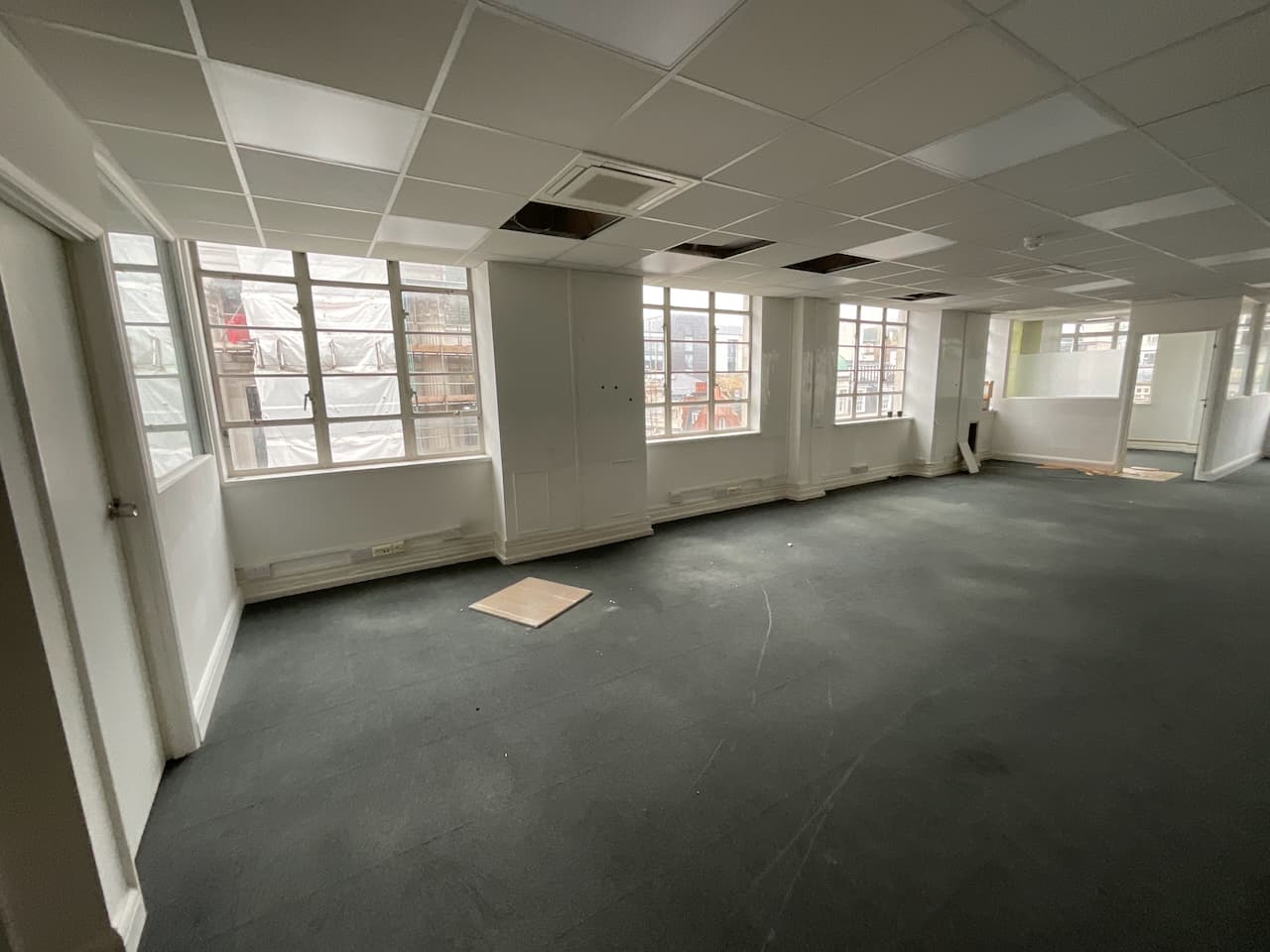
Dilapidations Case in Great Portland Street:
Navigating the complexities of dilapidations claims can be challenging, which is why our expertise in dealing with such matters was pivotal in assisting a tenant on Great Portland Street. When faced with a claim...... Read more
Navigating the complexities of dilapidations claims can be challenging, which is why our expertise in dealing with such matters was pivotal in assisting a tenant on Great Portland Street. When faced with a claim that appeared overstated, we stepped in to provide a comprehensive assessment and achieve a more balanced outcome.
Our careful evaluation involved:
- Reviewing the schedule of dilapidations to ensure accuracy and relevance.
- Identifying discrepancies where items exceeded lease obligations or inaccurately represented the tenant's responsibility.
- Scrutinising the cost methodology for items, paying particular attention to pricing basis, any potential betterment, and associated consequential works.
Through our strategic negotiations with the landlord’s surveyor, we were able to secure a significant reduction in the claim, resulting in substantial cost savings for our client. This case exemplifies our commitment to safeguarding tenant interests while fostering constructive relations within the landlord-tenant dynamic. If you're facing a similar challenge, we're here to help you navigate it efficiently and effectively.
#interimschedule #BuildingDefects #dilapidations #ConstructionSurveying #CommercialProperty #RealEstateSurveying #terminalschedule #BuildingSurveying #AssetManagement #PropertySurveying #LeaseManagement